Nightlife is Changing, How to Keep Up.
WNDR · May 26, 2026
An analysis on changing consumer patterns and a comprehensive playbook for venues to put their regular first.
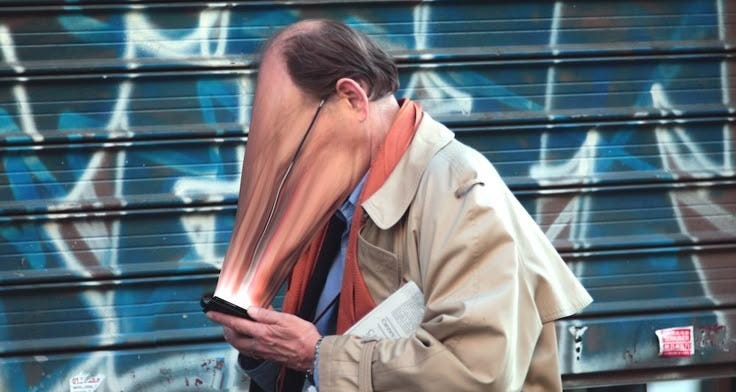
Desensitization Olympics
Admit it, you’ve been thinking about hopping on a prediction market. It’s almost impossible to avoid them. These days it’s rare you even look at a screen for more than ten minutes without seeing a Polymarket banner plastered over your feed. They were also the official live odds partner for the Golden Globes. And to lend more absurdity to the situation, Kalshi aired TV ads during the NBA finals.
Mind you, these are glorified bookies.
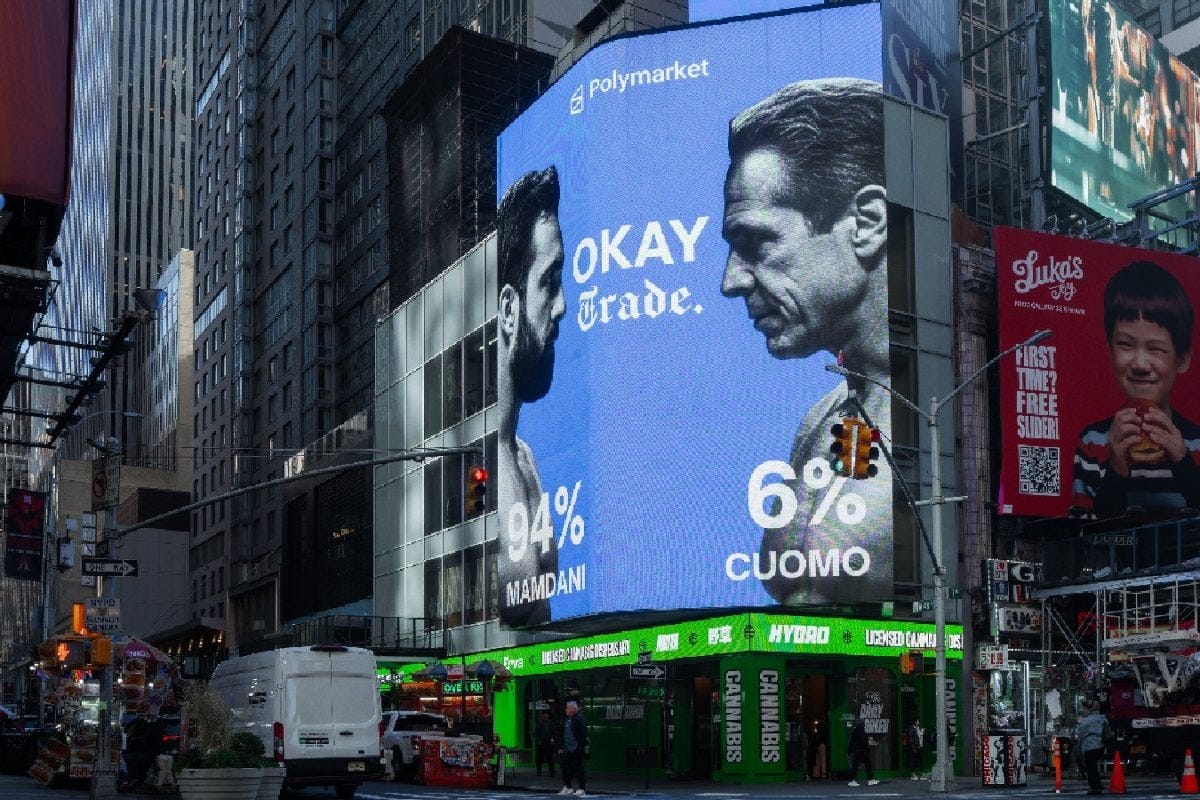
Polymarket is working with Nasdaq to open a market that allows ‘trading’ on private companies. But, given the nature of prediction markets writ large, this functionality results in a product that emulates a gambling platform more than a trading floor. Participants can bet on odds for whether a company will outperform another, whether a valuation will be over or under a certain number, etc.
Normally, you’d expect such a platform to advertise to traditionally skilled and educated investors (obviously the most qualified to participate in such a market). The last thing you should do is launch a $1 million ad campaign primarily targeted at Instagram and Facebook. But, that’s exactly what Polymarket did.
For reference, letting the average American consumer effectively gamble on private companies is analogous to building a window on a casino and letting the peeping toms place wagers on the people at the table.
Coupled with a failed launch of a prediction market for whether a nuclear weapon would be used in the coming months, these platforms are starting to seem like a prelude to a wide-scale dystopian Desensitization Olympics.
The Shiny New Object
Now, I promise this connects to nightlife. We’re getting there. The reason I bring all this up is because it’s the latest episode in a long line of developments. It’s been happening for decades. A coordinated training program for consumers that’s implanting a narrative that attention and dopamine are renewable. Stimulation has become the floor, not the ceiling. And the floor is rising.
It’s happening in every industry. Hollywood has become CGI warfare, flashy wins. You purchase products with the prettiest ads. And when’s the last time you really didn’t judge a book by it’s cover? Exactly, if it doesn’t captivate your first glance, you don’t even open the book.
Attention is the new currency. The question, then, has become are you bought in?
Nightlife is perhaps one of the longest case studies of this phenomenon. Nearly two decades of upgrades. Today, you get a stronger CO2 cannon, a brighter set of lasers, and a higher net decibel count - your venue is outperforming the neighbor.
In the midst of a race to become and remain ‘the shiny new object on the street,’ many venues have inadvertently left customer loyalty in the dust. By every traditional metric of loyalty, customers are less attached to venues than ever. The arms race failed and both sides lost. Production cost skyrocketed, but so did churn. Retention fell, somehow.
Gen Z is drinking less than ever, and we’re seriously still asking why? You can’t out-stimulate an algorithm. When people do go out, they don’t want the same cheap dopamine that they get from sitting on their couch scrolling for hours. They want connection.
More than ever, people are starting to wake up to the fact that experience is absent at many venues. They’re replacing the nightclub with run clubs and sober raves right in front of our eyes. Maybe it’s because your fog machine can’t compete with a militia of 10,000 top-of-class engineers coordinated around a mission to algorithmically capture our attention.
The Playbook
There’s another approach. Last summer, I stayed in Belgrade, Serbia for four days. On the first morning of our stay, my friends and I visited the Тезга café, across the street from our apartment. By the fourth consecutive day of our visiting this café, the owner had placed a cappuccino on the table in front of me before I even had a chance to light my cigarette after sitting down. There’s no explaining it, that’s a place I want to go back to.
It felt the exact same at the bars that we became regulars at during our time there. By the second night, they knew who we were. The infrastructure was the relationship, our presence compounded. The personal connection came first, we could’ve cared less what the speakers were playing. The menu, the lights, the room, it’s all just decor.
From our experience observing the industry from both an internal and external perspective, nightlife is evolving. I’ve organized what I think is a reasonable playbook based in historical patterns and predictive analysis on consumer trends.
*stop chasing new customers at the expense of the repeat one. It can be over than 10 times more expensive to acquire a customer when compared to retaining an existing one. It’s well-known industry mathematics in hospitality, but the faćade of bright colors and loud music has hypnotized many into prioritizing quantity over quality.
*build an infrastructure that remembers them. Everyone loves when their favorite table is open the moment they walk in on a Thursday. When the bartender calls out their name as the door swings open. A drink that’s poured before they even have to say a word. The familiarity is the product, the feeling that this place is also partially theirs.
*stop confusing production with experience. Great production synthesizes a one-night dopamine spike. Great experience synthesizes a relationship. They compound differently. Production depreciates, and there’s always a V2.0. The shift from “what can we put in this room” to “who is in this room” changes the very fabric of a venue’s customer loyalty.
*reward presence, not consumption. Many venues have created a habit of consistently rewarding the highest spender. After all, if the pockets are happy, why wouldn’t you? But, a deprioritized regular quickly changes to a former regular. And you can no longer blame the economy for a lower quarterly average spend per head.
The shiny new spot down the block has a half-life of one weekend. The regular has a half-life of, well, half a life.
Dressing up financial markets as games, putting production before experience. Synonymous, in a lot of ways. Next, we will dive deeper into the concept of the third space, a space for people to exist outside work and home. An evolutionary necessity that I subtly brought light to in writing this.
Locals know
-Tala